Thriving Mindfully on the Way to Fantabulous 56 and 2021

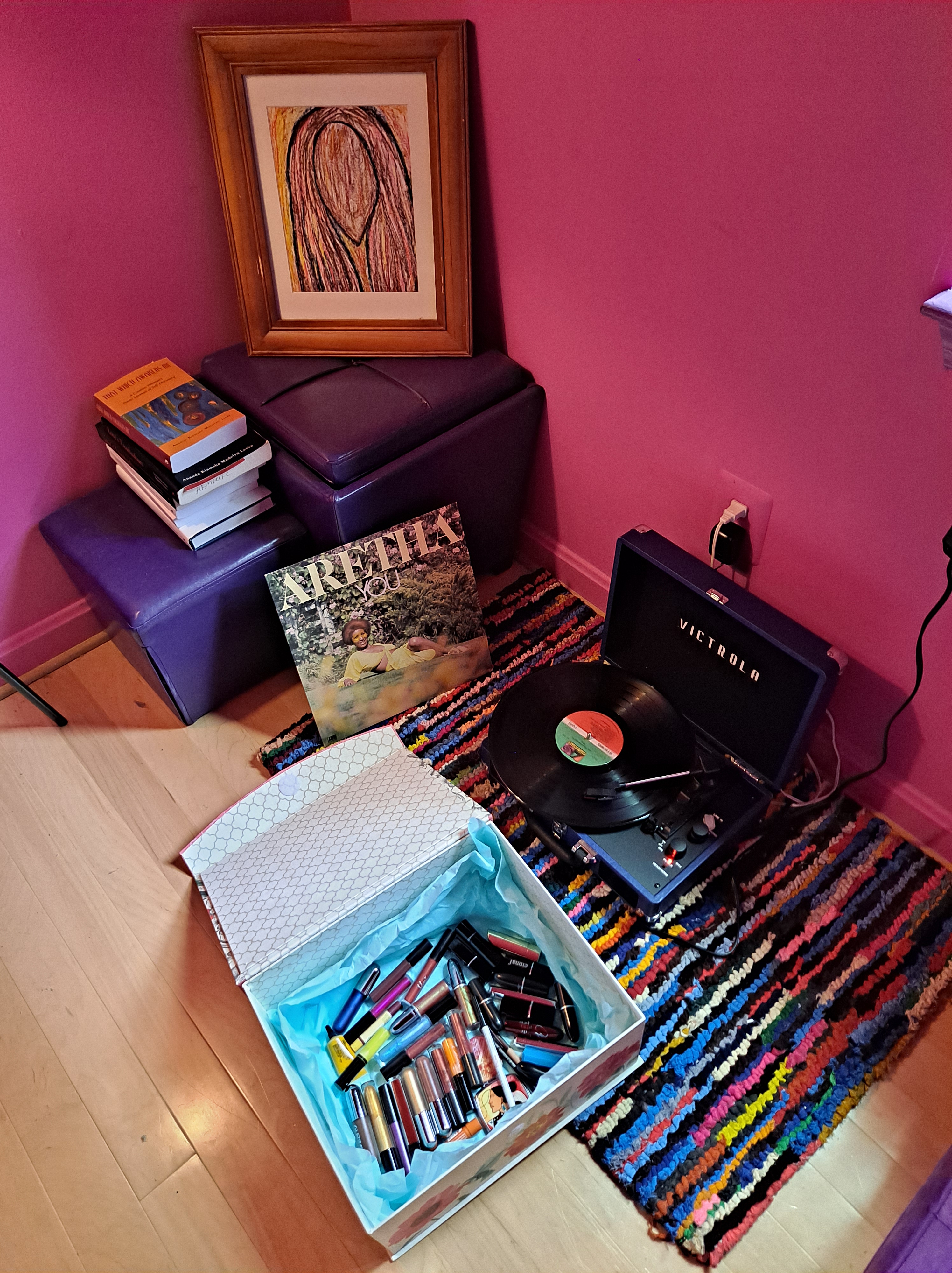
Birthdays are some of my favorite celebrations. I love mine so much that I celebrate it monthly. I use my monthly birthday to slow down, reflect on, and celebrate my small. medium, and big wins. This year, I used many of my monthly birthdays as a personal retreat due to my emotional struggles with the impact of the COVID-19 pandemic on my life, career, and business.

During my personal retreats, I looked at my full self in a mirror and came face-to-face with my vulnerabilities, challenges, wins, and losses. As a result, I gained new insights, brainstormed innovative solutions, participated in women’s healing circles, read inspirational books and magazines, and spent more time walking in nature. I also decided to change my pescatarian diet to a vegan diet, get more sleep, seek support from a therapist, join a virtual meditation community, deepen my study and practice of digital wellness, and move my body with more dance, Barre 3, yoga, walking, and bike riding. All of these efforts helped me set intentions and create shifts in how I choose to show up in my life, relationships, and career. They prepared me to walk into my fantabulous 56th year later this month and 2021 with a new mantra and intention: SOAR.

The best thing about a personal retreat is you get to choose how long it will last and what you will focus on. Over the past several years, I have used several formats for my personal retreats. Here are several examples.

  • A week: one to three hours per day starting on a Sunday and ending on a Saturday)
  • A three-day weekend: several hours per day beginning on Friday evening, Saturday, and Sunday
  • A full-day: two hours in the morning, two hours in the afternoon, and one hour in the evening
  • A half-day: two or three hours

What changes occurred in your life and career this year?

Have you embraced or resisted the changes?

Do you need a personal retreat before 2020 ends?

Do you need help getting started on your personal retreat?

Join me for the Thriving Mindfully Academy’s Come Home to Yourself Retreat on December 20th or December 27th from 2-4:30 p.m. ET via Zoom.

The Come Home to Yourself Retreat will be offered twice. You can choose to attend the virtual retreat on December 20th or December 27th. Consider giving the Come Home to Yourself Retreat as a holiday gift to your loved ones, friends, and colleagues. Register here for the December 20th retreat. Go here for the December 27th retreat.

During the virtual retreat, you will:

  • Practice mindful self-care with deep breathing, meditation, affirmations, and gentle chair yoga
  • Reflect on and journal about who you have been and the lessons you learned in 2020
  • Identify who or what’s been getting in your way in 2020
  • Release and practice forgiveness
  • Explore who you want to be and how you want to show up in 2021
  • Set intentions and identify the resources, action steps, and accountability support you need to manifest the person you want to be in 2021
  • Create a self-celebration plan to appreciate your small, medium, and big wins in 2021

A Zoom video link will be emailed to you once you register for the online retreat.

Register for the December 20th retreat here.

Register for the December 27th retreat here.

3 Holiday Gifts for You & Your Family, Friends, Colleagues & Clients

How are you and your family, friends, colleagues, and clients taking care of yourselves this holiday season?

If you need support, I’ve got three special holiday gifts that will help you and your colleagues stay grounded and calm this holiday season.

If you need more support with a personal retreat, join me for the Come Home to Yourself Retreat on December 20th or December 27th at 2-4:30 p.m. via Zoom. Use the links below to purchase tickets. Feel free to get holiday gift tickets for colleagues, family, and friends.

Enjoy your holiday season!

Come Home to Yourself with a Personal Retreat Before 2020 Ends

In times of great change, I have often engaged in an internal boxing match where I resist and struggle with accepting my normal life has been altered. That struggle is a boxing match I always lose. Why? Because change is inevitable. It’s always going to happen. In 2016, I gave a talk on how I used mindfulness to embrace change in the midst of career reinvention at the Nonprofit Technology Network’s annual conference in San Jose, California.

During my talk, I shared the four lessons I learned:

  • Lesson #1: Ask for help.
  • Lesson #2: Take great care of yourself.
  • Lesson #3: Be a lifelong learner.
  • Lesson #4: Be open to possibilities.

This year, I almost forgot these lessons as I struggled to deal with changes resulting from the COVID-19 pandemic, social justice movements, economic instability, fake news, politics, and the national and local elections. I tried to ignore the changes by filling my time with serving others through the Thriving Mindfully Academy. That strategy lasted for about three months until I realized I was burning out in May. So I stepped back from many of my obligations, took a social media summer vacation, and changed the way I practiced self-care. I began giving myself more time and space for do-it yourself (DIY) personal retreats. My DIY personal retreats helped me recharge, reflect, and reconnect with my authentic self.

During my personal retreats, I looked at my full self in a mirror and came face-to-face with my vulnerabilities, challenges, wins, and losses. As a result, I gained new insights, brainstormed innovative solutions, participated in women’s healing circles, read inspirational books and magazines, and spent more time walking in nature. I also decided to change my pescatarian diet to a vegan diet, get more sleep, seek support from a therapist, join a virtual meditation community, deepen my study and practice of digital wellness, and move my body with more dance, Barre 3, yoga, walking, and bike riding. All of these efforts helped me set intentions and create shifts in how I choose to show up in my life, relationships, and career.

More on personal retreats …

The best thing about a personal retreat is you get to choose how long it will last and what you will focus on. Over the past several years, I have used several formats for my personal retreats. Here are several examples.

  • A week: one to three hours per day starting on a Sunday and ending on a Saturday)
  • A three-day weekend: several hours per day beginning on Friday evening, Saturday, and Sunday
  • A full-day: two hours in the morning, two hours in the afternoon, and one hour in the evening
  • A half-day: two or three hours

What changes occurred in your life and career this year?

Have you embraced or resisted the changes?

Do you need a personal retreat before 2020 ends?

Do you need help getting started on your personal retreat?

Join me for the Thriving Mindfully Academy’s Come Home to Yourself Retreat on December 20th or December 27th from 2-4:30 p.m. ET via Zoom.

The Come Home to Yourself Retreat will be offered twice. You can choose to attend the virtual retreat on December 20th or December 27th. Consider giving the Come Home to Yourself Retreat as a holiday gift to your loved ones, friends, and colleagues. Register here for the December 20th retreat. Go here for the December 27th retreat.

During the virtual retreat, you will:

  • Practice mindful self-care with deep breathing, meditation, affirmations, and gentle chair yoga
  • Reflect on and journal about who you have been and the lessons you learned in 2020
  • Identify who or what’s been getting in your way in 2020
  • Release and practice forgiveness
  • Explore who you want to be and how you want to show up in 2021
  • Set intentions and identify the resources, action steps, and accountability support you need to manifest the person you want to be in 2021
  • Create a self-celebration plan to appreciate your small, medium, and big wins in 2021

A Zoom video link will be emailed to you once you register for the online retreat.

Register for the December 20th retreat here.

Register for the December 27th retreat here.

Practice Self-Care in 5 Minutes or Less During 2020 COVID-19 Holiday Season

The COVID-19 global pandemic has changed how we connect with each other and our holiday celebrations. Many of us are unable to see, touch, and show affection towards our loved ones in person. Most of us have to follow mask and social distancing guidelines when we spend time with them. Living this way has left so many of us starving for physical touch.

Physical touch is a basic human need. Going without it for long periods can impact our emotional, mental, and physical well-being. Giving ourselves daily hugs is one mindful self-care practice we can use to strengthen our well-being.

Hugging yourself is a FREE self-care practice that requires less than five minutes of your time. It offers you an opportunity to practice loving kindness and strengthen your resiliency. A self-hug is also available 24 hours a day, 7 days a week, and 365 days a year. All you have to do is decide and set an intention to give yourself a hug or hugs on a daily basis. Once you set your intention, take action and watch how your self-hugs turn into acts of self-love and self-empowerment.

Did you know that when you hug yourself, your body releases the hormone, oxytocin, the “love hormone”? Oxytocin helps reduce stress and tension by lowering cortisol (stress hormone) levels in the body. It also lowers blood pressure, slows the heart rate, and improves moods.

Hugging yourself for 20 seconds or more is a serotonin booster. Serotonin is known as the “feel good” hormone that is produced and spread by neurons in the brain. It helps you feel happy, calm, and confident.

Consider following the advice of family therapist Virginia Satir who is famous for saying, “We need 4 hugs a day for survival. We need 8 hugs a day for maintenance. We need 12 hugs a day for growth.” 

In an effort to help you navigate the 2020 COVID-19 holiday season, the Thriving Mindfully Academy has created the Self-Hug Challenge. It is rooted in our HUG3 self-care practice. HUG3 is an acronym that stands for:

H: Hold space for yourself with

U: Unconditional Love

G3: Grace, Growth, and Gratitude

May it inspire you to take better care of yourself with a daily hug!

Self-Hug Challenge Tips: To help you get started with the Self-Hug Challenge, we have included tips to support you.

30-Day Self-Hugs: Try 1 hug for 20 seconds per day. Consider giving yourself a hug in the morning before you get out of bed. If the morning doesn’t work, take a mid-day hug break or end your day with a hug before you go to sleep.

60-Day Self-Hugs: Try 4 or more hugs that last 1 minute or more per day. Notice how the increase in hugs makes you feel. If it feels good, add more hugs to your day.

90-Day Self-Hugs: Make hugging a self-care maintenance practice with 8 or more hugs per day.

120-Day Self-Hugs: Take your hug life to the next level of growth with 12 or more hugs per day.

Additional Resources: Check out the Thriving Mindfully Academy’s resources and virtual meditation classes.

Self-Care

Self-Care Awareness Month

Loving Kindness Month

Register for the Thriving Mindfully Academy meditation classes in November and December.https://www.eventbrite.com/e/130348739589

Eventbrite: November 30 at 7-7:30 PM ET via Zoom

Eventbrite: December 7, 14, 21, and 28 at 7-7:30 PM ET via Zoom

Take A Step in the Direction of Kindness on World Kindness Day

I think we all need to slow down and celebrate World Kindness Day on November 13th given everything that has happened to us in 2020. World Kindness Day has become one of my favorite days to recommit to my loving kindness practices. It was launched in 1998 by the World Kindness Movement, a coalition of nations’ kindness nongovernmental organizations to highlight good deeds in the community that focus on the positive power of making kindness the norm and bringing people together to celebrate our common humanity.

I believe kindness starts in our hearts with an understanding and acceptance that we deserve it. When we claim and accept our own kindness and treat ourselves with gentleness, nonjudgment, patience, and tolerance FIRST, we strengthen our ability to be kind to our loved ones and others. That’s what I call taking a step in the direction of kindness!

May we all be inspired on World Kindness Day to take a step in the direction of kindness. May the Thriving Mindfully Academy’s Loving Kindness Month resources below help you in your kindness journey.

Loving Kindness Month Resources

Random Acts of Kindness’ World Day of Kindness

VIDEO: 10 Ways to Give Yourself Loving Kindness

Do You Need An Election 2020 Self-Care Check-In?

Yesterday, I cried when I heard the U.S. Election 2020 news that Joe Biden and Kamala Harris had won. My tears were intense and filled with deep gratitude and relief. I rode my bike down to Black Lives Matter Plaza to celebrate with the DC community. Seeing the diverse group of people celebrate and being a part of that celebration filled my heart with unspeakable joy and left me speechless. Check out my photo slideshow.

My tears and emotions were a wake up call. They reminded me of the heaviness I have been carrying during the Election 2020 season. So I decided to do an Election 2020 Self-Care Check-In this week that focuses on loving kindness practices to nourish myself.

This morning, I slowed down with some deep breaths and became still as I reflected on how tough the Election 2020 season has been. I recognized I have experienced many moments of stress and anxiety. My stress and anxiety have been caused by worrying about what is happening to BIPOC, LGBTQ, elderly, and disabled communities. I have overdosed on way too much news and social media. I lost sleep being concerned about the impact of COVID-19 on everyone’s spiritual, mental, emotional, and physical health; relationships; finances; and jobs. Worrying about police brutality against BIPOC communities and the safety, security, and education of myself, family, friends, students, teachers, and frontline, healthcare, and service industry workers has also concerned me.

My inner critic Broomie (a nickname for Broomhilda) wants me to get over it and woman up. Broomie judges me harshly at times. She tries to shame me too. Today, I had a heart-to-heart with her. I told her I was womaning up by nurturing myself with loving kindness practices this week, the rest of November which is Loving Kindness Month, December, and 2021!

Loving kindness is the act of befriending yourself with gentleness and nonjudgment in all you feel, think, say, and do. We all deserve it. It is one of the best ways to practice self-care. Go here to learn more about it and Loving Kindness Month.

If you have experienced stress, anxiety, fear, and/or trauma as a result of the Election 2020 season, COVID-19, police brutality, racial injustice, or economic instability, I invite you to use this week and the rest of the month to focus on practicing self-care with loving kindness for yourself. Use the resources below.

RESOURCES

Loving Kindness Practices for Self

Start and/or end your day with a loving kindness moment. All you need are a few minutes (1-5 minutes; take more time if you want to). Begin with three to seven deep breaths. Allow yourself to become still as you breathe. Notice how your body feels. Pay attention to any physical sensations. Become aware of your breath. Observe any sounds and smells around you. Shift your attention to any thoughts in the mind. Just witness the thoughts. Don’t try to push them away or address them. Continue to breathe at your body’s natural rhythm. Start with an intention such as “my intention is to open my heart and offer myself loving kindness.” Use the Loving Kindness Month affirmation and practice above.

MEDITATION CLASS ON MONDAY, NOVEMBER 9TH AT 7-7:30 PM ET VIA ZOOM

Click here to register on Eventbrite.

VIDEO: 10 Ways to Give Yourself Loving Kindness

Take Care of Yourself in November and During Election Week with Loving Kindness Month Meditation Classes & Resources

Happy November & Loving Kindness Month Groovy People! 

2020 has been a year like no other. So many things have happened to us as a result of the COVID-19 pandemic, economic instability, divisive politics, fake news, and the constant acts of injustice, oppression, and violence against indigenous and people of color, women, children, the elderly, the disabled, and LGBTQ communities. In an effort to provide support to everyone, I am using the Thriving Mindfully Academy’s platform to launch Loving Kindness Month this month to remind us all of the power we have to slow down and take better care of ourselves with gentleness and nonjudgment.

I hope you will join us this month as we shift our 2020 energy and mindset with weekly themes, a weekly Mindful Monday meditation class first class starts tonight at 7-7:30 PM ET), an online retreat (details will be provided later this week), and other resources including new podcast episodes, a YouTube playlist, and more. 

Go here to learn more about Loving Kindness Month. Share the events and resources with your family, friends, and colleagues!

It’s Time We Embrace Digital Wellness: Why We Need It in Our Life, Career & Business to Create Tech-Life Balance

Technology has become our BFF and made life and work easier. It has also caused many of us to be glued to digital devices for the majority of our day. As a result, we are missing out on being present for moments that matter. We’re so plugged in that we are suffering from digital overload and distraction. We don’t even realize we need tech-life balance.

Does that sound like you or someone you know?

What Is Tech-Life Balance?

Tech-life balance is the use of technology in mindful, intentional, and healthy ways that have a positive impact on our personal and professional life and relationships.

How Do We Maintain Our Relationship with Technology & Create Tech-Life Balance?

Digital Wellness is the answer.

Digital Wellness is the use of technology in mindful, intentional, and healthy ways. Watch the video and go here to listen to Thriving Mindfully Podcast about digital wellness.

What Gets in the Way of Practicing Digital Wellness?

Digital overload and distraction are two of the most common challenges to digital wellness. Digital overload happens when our brain is bombarded with constant electronic stimuli.

Digital overload pushes our brain to work overtime. It divides our attention and causes our stress levels to soar. When we experience digital overload and unplug from our digital devices, our brains remain in a hyper-alert and distracted state.

Digital distraction occurs when we spend too much time with digital devices that it is detrimental and even dangerous to our relationships.

It’s Time to Get Real About Your Tech Use!

Get your favorite pen, journal, or a piece of paper. Take a few minutes to answer each of the questions below. They will help you become aware of how you currently use technology. Your responses will help you identify what needs to be included in your Digital Wellness Intention.

Questions

  1. How much time do you currently spend online Monday through Friday and on the weekends?
  2. Do you take breaks from using technology?
  3. What stresses you out when you are online?
  4. Does your body experience tension, tightness, or discomfort while you are online?
  5. How do you take care of your body while you are online (the way you sit or stand, screens that protect your eyes, etc.)?
  6. Do you sleep with your digital devices on or near your bed?

How You Can Use Digital Wellness to Be Intentional About Your Tech Use

You create digital wellness in your life, career, and business with an intention and a plan. In my work at the Thriving Mindfully Academy, I offer people just like you and mission-driven companies, organizations, and communities three steps to create digital wellness. The three steps include:

  1. Prepare a digital wellness intention. A digital wellness intention is a statement about the way you want to use technology and how you want to feel when you use technology.
  2. Conduct a tech assessment. Explore how you are you currently using technology and the barriers you may have to your tech-life balance.
  3. Establish a weekly schedule with a revised digital wellness intention. Based on what you learned from your tech assessment, revise your digital wellness intention. Identify one to three steps you can take to create tech-life balance on a weekly basis over the next 30, 60 or 90 days. Remember to start small!

Resources

If you or your organization, company, and community need more self-care, mindfulness, and wellness resources, visit the Thriving Mindfully Academy here.

If you are new to mindfulness, self-care, and wellness or simply want to learn more about these areas, visit the Thriving Mindfully Academy’s resource pages below.

Training, Speaking & Coaching

I help people just like you and mission-driven companies, organizations, and communities outsmart stress and burnout, reclaim and practice their birthrights of mindfulness and self-care, and create wellness in their life, career, business, and community service. My personal goal is to empower as many people as I can in my local and global communities with the education, training, and practices they can use to create their own health insurance plan with mindfulness, self-care, and wellness.

My services are offered virtually (via Zoom, Facebook Live, Google Meet, Skype, and FreeConferenceCall.com) and in-person. I offer trainings and one-on-one coaching sessions. I am available to speak at your next conference and event, and for digital, print, radio, and television interviews.

Interested in exploring how you might work with me this year?

Fill out my client intake survey here and then I’ll set up a free 20-minute consultation call with you. Once you complete the survey, I will follow up with an email.

For more information, contact me at ananda@anandaleeke.com.

About Me

My name is Ananda Leeke. I am an award-winning wellness professional, author, and artist. I discovered mindfulnessself-care, and wellness when my career as a lawyer, an investment banker, and a digital communications professional stressed me out, caused burnout, and did not produce the level of success I expected. During my healing journey, I studied and practiced meditation, yoga, reiki, journaling, art-making, and creative writing. They helped me develop self-care practices and become resilient. As a result, I became a certified yoga and mindfulness teacher, a reiki master practitioner, a sound healer, and an artist-in-residence for the Smith Center for Healing and the Arts. Today, I share my gifts and expertise as the founder and Chief Mindfulness Officer of Ananda Leeke Consulting, a wellness company, and the Thriving Mindfully Academy, an online learning platform. Visit AnandaLeeke.com for more information. Follow @anandaleeke on social media.

About My Mindfulness Books

Check out my three mindfulness books here (available on Amazon). My books make great gifts for yourself and others.

Stop Living on Autopilot with Mindfulness

Most of us human beings are creatures of habit. We live our lives on autopilot. Autopilot happens when we repeat behaviors day in and day out. Our brains hardwire these behaviors so we can do them again and again without thinking. When we’re on autopilot, we disconnect from the present moment and reality. We exist either in the past or some place in the future.

When we’re on autopilot, we repeat the same habits, patterns, and routines without any awareness of whether some or all no longer serve our highest good. When we’re on autopilot, we can get caught up in our thoughts and emotions where our brain reacts automatically without thinking. As a result, we may overreact and say or do something that we later regret.

Autopilot takes us away from our lives and work. Mindfulness brings us back to our lives and work. Practicing mindfulness interrupts autopilot.

What Is Mindfulness?

Mindfulness is your birthright. You are born with the ability to be aware of what’s happening inside and outside of ourselves in the present moment.

Mindfulness becomes a practice when you choose to pay attention to what’s happening inside and outside of yourself with the “Big 5” mindful self-care vitamins: loving kindness, compassion, nonjudgment, patience, and forgiveness.

Mindfulness helps you:

  1. Act with awareness.
  2. Change the hardwiring of your brain.
  3. Create new healthy habits.
  4. Make better choices.

As you practice mindfulness, remember the following:

  • You will lose your focus. You’re human. It’s normal and natural to lose your focus.
  • When you lose your focus, smile when you become aware of the loss of focus, and use your breath as an anchor to return to the present moment. You smile because you are giving yourself an opportunity to practice your birthright. You breathe deeply because breathing gives you an opportunity to reset and return to the present moment.
  • Release the need to criticize, judge or shame yourself when you loose your focus even if you lose it 10 times in 10 seconds. Use the Big 5 mindful self-care vitamins of loving kindness, compassion, nonjudgment, patience, and forgiveness to ground yourself as you remember mindfulness is a practice and a process.

Meditation: A Mindfulness Practice That Can Help You to Stop Living on Autopilot

Meditation is a mindfulness practice that invites you to befriend your mind by choosing to focus your awareness on what’s happening inside and outside of yourself. It’s the act of observing thoughts in the mind, physical sensations, and sounds.

In meditation, you can use your breath to help focus your attention and cultivate stillness by observing it and coming back to it when your mind focuses on thoughts, physical sensations, and sounds.

Meditation can help you increase self-awareness, relax, improve concentration, reduce stress, strengthen emotional and physical well-being, and encourage a healthy lifestyle.

Check out the Thriving Mindfully Podcast episodes on meditation below.

Below are several suggestions you can use in your meditation practice.

  • Breathing: In and out through the nose OR in through the nose and out through the mouth
  • Posture: Seated, standing, or laying down
  • Eyes: Closed or opened with a slightly lowered gaze
  • Focus: Observe the sensations in the body. Notice the thoughts in the mind. Pay attention to the breath. Observe the sounds around you. You can also use a mantra (word or phrase), music, and movement to help you focus your attention in meditation.

Resources

If you or your organization, company, and community need more self-care, mindfulness, and wellness resources, visit the Thriving Mindfully Academy here.

If you are new to mindfulness, self-care, and wellness or simply want to learn more about these areas, visit the Thriving Mindfully Academy’s resource pages below.

Training, Speaking & Coaching

I help people just like you and mission-driven companies, organizations, and communities outsmart stress and burnout, reclaim and practice their birthrights of mindfulness and self-care, and create wellness in their life, career, business, and community service. My personal goal is to empower as many people as I can in my local and global communities with the education, training, and practices they can use to create their own health insurance plan with mindfulness, self-care, and wellness.

My services are offered virtually (via Zoom, Facebook Live, Google Meet, Skype, and FreeConferenceCall.com) and in-person. I offer trainings and one-on-one coaching sessions. I am available to speak at your next conference and event, and for digital, print, radio, and television interviews.

Interested in exploring how you might work with me this year?

Fill out my client intake survey here and then I’ll set up a free 20-minute consultation call with you. Once you complete the survey, I will follow up with an email.

For more information, contact me at ananda@anandaleeke.com.

About Me

My name is Ananda Leeke. I am an award-winning wellness professional, author, and artist. I discovered mindfulnessself-care, and wellness when my career as a lawyer, an investment banker, and a digital communications professional stressed me out, caused burnout, and did not produce the level of success I expected. During my healing journey, I studied and practiced meditation, yoga, reiki, journaling, art-making, and creative writing. They helped me develop self-care practices and become resilient. As a result, I became a certified yoga and mindfulness teacher, a reiki master practitioner, a sound healer, and an artist-in-residence for the Smith Center for Healing and the Arts. Today, I share my gifts and expertise as the founder and Chief Mindfulness Officer of Ananda Leeke Consulting, a wellness company, and the Thriving Mindfully Academy, an online learning platform. Visit AnandaLeeke.com for more information. Follow @anandaleeke on social media.

About My Mindfulness Books

Check out my three mindfulness books here (available on Amazon). My books make great gifts for yourself and others.