I will be taking a mini blog vacation from August 28 to September 18 so I can dive deep into blogging on kg yoga life practices’ blog (http://kgyoga.blogspot.com) for the OM A Day Campaign (September 1-30) in honor of National Yoga Month and OneWebDay 22 Countdown. Please stop by kg yoga life practices’ blog and see what I am talking about. I’ll also blog on Sisterhood, the Blog – http://sisterhoodtheblog.wordpress.com.
On September 21st, I will a post a blog about my Next Chapter Book Blogging Group adventures from reading The Joy Diet by Martha Beck. Click here to learn about the group: http://tnc-thejoydiet.blogspot.com. Feel free to join the group. It is an amazing community of dynamic and supportive folks!
Be sure to check the right side of my blog for all of my September events. Please participate if you can.
Enjoy September! Celebrate National Yoga Month and OneWebDay (www.onewebday.org) on September 22!
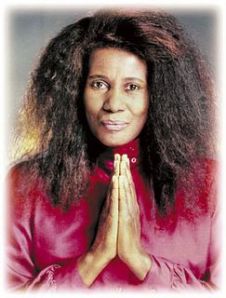
Today marks the birthday of Alice Coltrane a/k/a Swamini Turiya Sangitananda, one of my greatest spiritual teachers. She was an amazing woman, teacher, leader/founder of an ashram, musician, mother, and wife to jazz musician John Coltrane. Click on the following link to see a YouTube video of a 1978 interview of Alice Coltrane and friends in concert in Bombay, India: http://www.youtube.com/watch?v=xgqimZjJZ3U.
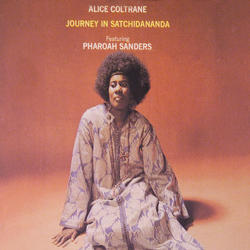
In 2004, my sistalove Shantam introduced me to Alice’s music. Journey in Satchidananda was the first CD I purchased. It remains one of my favorites.
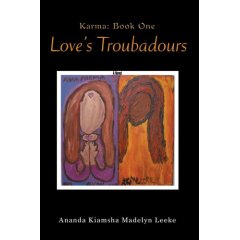
Alice’s music deepened my practice of yoga, mantra chanting, and meditation. It also helped me write and complete my debut novel, Love’s Troubadours – Karma: Book One (www.lovestroubadours.com).
One of my best memories of Alice is from 2007 when Shantam and I drove to Newark, New Jersey to see her perform with her son Ravi Coltrane (www.ravicoltrane.com). There are no words to describe the power and presence of such a beautiful soul. Her devotion to Spirit manifested in each composition she lovingly offered to the audience.
LOVE was the only vibration we could feel in her presence. Shantamand I sat mesmerized with tears rolling down our faces for most of that magical evening. We knew then that it was a lifetime experience we would always cherish. Alice made her life transition in January 2008. To learn more about her, visit www.alicecoltrane.org. For more information about her husband John, visit www.johncoltrane.com.
That Which Awakens Me: Kreative Grooviness, 2005 (painting on cover of my new book)
My new book, That Which Awakens Me: A Creative Woman’s Poetic Memoir of Self-Discovery (September 2009) includes a quote from Alice, several references about her music, and a poem about her transition. I thought you might enjoy reading the quote I use to open my new book. See below. Enjoy!
“Go within. God is working on the inside. Just go into the sanctuary of your heart, offer your prayers and your worship there.”
Thank you for stopping by!
Many blessings,
Ananda
PS: Please remember to honor the following days of remembrance this week.
1) August 26 – 89th Anniversary of American women’s right to vote (passage of the 19th Amendment to the Constitution)
2) August 28 – 46th Anniversary of Dr. Martin Luther King, Jr.’s I Have A Dream Speech and my brother Mike Leeke’s birthday
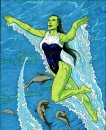
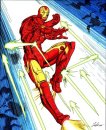
My brother Mike Leeke, an amazing comic book graphic artist
Copyright by Michael D. Leeke
Copyright by Michael D. Leeke
Tune into Go Green Sangha Radio on August 29that 11:00 a.m. for my interview with my brother Mike about his career as a comic book graphic artist and the power of diversity in his artwork and comic book stories. Click here to listen to the show: http://www.talkshoe.com/tc/21325. Visit Mike’s Facebook page to learn more about his artwork and career as a comic book graphic artist: www.facebook.com/michaelleeke.
4) August 29 – 4th Anniversary of Hurricane Katrina and Michael Jackson’s birthday
Send love and light to all those who were and remain affected by Hurricane Katrina. If you are in DC, join me for a free yoga class that honors everyone impacted by Hurricane Katrina on August 29th from 9am to 9:30am in Malcolm X-Meridian Hill Park. Click here for more information: http://yoga.meetup.com/584.
Have you caught the OneWebDay 2009 (www.onewebday.org) fever yet? If not, watch the YouTube video below featuring Susan Crawford, the founder of OneWebDay. It will inform and energize you!
If you have caught the OneWebDay 2009 fever, then join the OneWebDay social networking site so you can really stay informed. It is FREE. Click here: http://my.onewebday.org.
On September 1, join me in participating in kg yoga life practices’ OneWebDay 22 Countdown Campaign (September 1-22), an online campaign that invites Internet users to:
-blog,
-tweet,
-include links and insights in their status updates and groups on Facebook and other social networking sites,
-use social bookmarking to share information,
-post photos,
-send emails and texts,
-record audio blogs and podcasts,
-create videos, and
-make Slide Share presentations that express the positive impact the Internet has had on their lives and work.
Before you go, tell me when you first started using the Internet and two of your fondest Internet memories. Don’t leave out any details!
When I started using the Internet: After I came back from my trip to Egypt in July 1995, I started practicing yoga and using the Internet. A friend helped me set up my very first AOL account on my computer. I used to get so excited when I would receive email. “You’ve Got Mail” became one of my favorite slogans. It was also one of my favorite movies (another story for another time).
Two of my fondest Internet memories:
Catherine Austin Fitts, Founder of The Hamilton Securities Group, Inc.
One memory occurred in January 1996 when I was recruited by Catherine Austin Fitts, the founder of The Hamilton Securities Group, Inc., to manage a $7 billion Federal Housing Administration (FHA) mortgage loan transaction. Austin is a dynamic investment banker and former Assistant Secretary of the FHA in the first Bush Administration: http://solari.com/about-us/catherine. She is currently President and CEO of Solari, Inc. (http://solari.com). In 1991, Austin used her own money to establish Hamilton as a woman-owned investment bank and financial software firm that emphasized digital technology and social responsibility. What a HUGE move for a woman!
Hamilton’s high tech offices on Dupont Circle in D.C.
Hamilton’s offices and culture were cutting edge. My colleagues were amazing. Diversity and a commitment to excellence and lifelong learning were core values that we all shared. Hamilton felt like a Silicon Valley tech company in D.C. Fast Company and Wired were required reading. Click here to learn more about Hamilton: http://www.dunwalke.com/11_Hamilton_Securities.htm.
I met Austin while working as the debt manager for the Office of the D.C. Treasurer. Austin’s passion for the Internet influenced me greatly. She inspired me to dive deep into digital technology and made sure I had ample opportunities to express my passion and marry it with my law degree and experience in securities and financial regulation. As a result, I established and managed Hamilton’s intellectual property protection program for its online products and services.
My second fondest memory was seeing the power of the Internet in action while I represented Hamilton at the U.N. Conference on Human Settlements in Istanbul, Turkey in 1996. It was amazing to see large crowds of people using the Internet cafe. Now I wonder how we ever lived without wi-fi and smart phones!
Click here to listen to the live shows: http://www.talkshoe.com/tc/42015. Don’t panic if you miss the show. You can download it several minutes after it airs.
Be sure to tune into Sisterhood, the Blog Radio on August 26 at 8pm EST for a discussion on “Spirituality: Blooming Right Where You Are.” The guest is Kelli Jarreaux, an ordained Interfaith Minister, attorney, arbitrator, mediator, global peace facilitator, life coach, and co-author of Hopwood, Bakke, and Beyond: Diversity on our Nations Campuses and Sacred Secrets: Finding Your Way to Joy, Peace and Prosperity.
Listen to Ananda share her schedule of radio show interviews for the week of August 24-30. She also talks about her kg yoga life practices’ OneWebDay yoga event on 9.22, OneWebDay 22 Countdown Campaign, and OM A Day Campaign.
Check out the new webisode of Ananda Leeke TV that discusses kg yoga life practices’ OneWebDay yoga class for Internet users on September 22 and OneWebDay 22 Countdown (September 1-22). OneWebDay 22 Countdown is an online campaign that invites Internet users to blog, tweet, include links and insights in their status updates and groups on Facebook and other social networking sites, use social bookmarking to share information, post photos, send emails and texts, record audio blogs and podcasts, create videos, and make Slide Share presentations that express the positive impact the Internet has had on their lives and work. It begins September 1 and ends September 22. For more information, visit http://kgyoga.blogspot.com. To learn about OneWebDay and find other events in your local community, visit http://www.onewebday.org. Join the OneWebDay social networking site to stay informed: http://my.onewebday.org.
Tune into Sisterhood, the Blog Radio on August 22 at 5:00 p.m. EST (had to cancel the original date – August 21@ 8pm) for my juicy conversation with NYCity Mama Carol Cain, a Latina and native New Yorker (www.nycitymama.com). Carol will talk about the reasons she established her NYCity Mama blog, lessons she learned from blogging, and favorite moments at the BlogHer 2009 Conference. She is an amazing woman who previously worked as a publishing and public relations professional. Carol considers herself a nomadic spirit with a passion for cultures, languages, and customs. Click here to listen to the show: http://www.talkshoe.com/tc/42015. If you miss the live show, don’t panic. You can download a recording from the web site (http://www.talkshoe.com/tc/42015) and listen to it at your convenience.
Today I thought I would give you a sneak peak at what’s going on with me during the month of September. See the news below.
1) On September 1, I will launch kg yoga life practices’ OM A Day Campaign, an online effort that will promote yoga and relaxation exercises for bloggers, Internet users, and creative folks. OM A Day will offer yoga tips, resources, and radio shows for 30 days. More information will be posted next week on http://kgyoga.blogspot.com.
2) On September 11, I will kick off kg yoga life practices Meetup Group’s Global Mala Project for Peace Awareness, a nine-day yoga class series that seeks to remind individuals that they have the power to create more peace in the world through mindfulness in their daily lives.Participants will have an opportunity to do 12 sun salutations. At the end of the nine-day practice, participants will complete 108 sun salutations dedicated to peace. The event will also honor individuals and countries impacted by the terrorist attacks of September 11th, United Nations International Peace, and Autumn Equinox. See the schedule below. For more information, check kg yoga life practices’ Meetup Group next week: http://yoga.meetup.com/584.
kg yoga life practices’ Global Mala Project for Peace Awareness was organized based on yoga teacher/peace activist Shiva Rea’s Global Mala Project (http://www.globalmala.org) The purpose of the Project is to unite the global yoga community to form a “mala around the earth” through yoga, meditation, and mantra practices based upon the sacred cycle of 108. A mala is a set of prayer beads made from 108 beads and used for keeping count while reciting, chanting, or mentally repeating a mantra or name of a sacred deity.
Global Mala Project for Peace Awareness Schedule
a. September 9 @ 6:45pm-7:15pm
b. September 10 @ 6:45pm-7:15pm
c. September 11 @ 6:45pm-7:15pm
d. September 12 @ 9am-9:30am
e. September 13 @ 9am-9:30am
f. September 14 @ 6:45pm-7:15pm
g. September 15 @ 6:45pm-7:15pm
h. September 16 @ 6:45pm-7:15pm
i. September 17 @ 6:45pm-7:15pm
3) September 22 marks kg yoga life practices’ Meetup Group’s first annual celebration of OneWebDay (http://onewebday.org) and National Yoga Month (http://www.yogamonth.org). Join me for a FREE short morning yoga class for Internet users from 7:15 a.m. to 7:45 a.m. in Malcolm X-Meridian Hill Park in DC. The class will meet by the waterfall that faces the reflecting pool located at the 16 Street and Florida Avenue, NW entrance. Participants should dress comfortably, refrain from eating and drinking two hours before the class, and bring their own mats. Yoga mats will NOT be provided. If it rains, the class will not be held.
OneWebDay was established by Susan P. Crawford in 2006 to encourage Internet users to celebrate online life and show how the Internet affects their lives. For more information, visit http://onewebday.org. For more information, visit http://yoga.meetup.com/584.
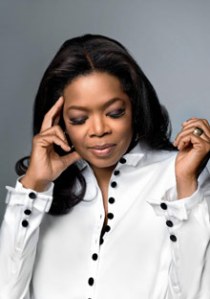
The September issue of O Magazine is probably my favorite issue for 2009 because it discusses power. I read the issue from cover to cover during the weekend. It was delicious! I even created several collages with magazine clippings in my copy of Wreck This Journal by Keri Smith (www.kerismith.com). Watch the Ananda Leeke TV webisodes to see what I am talking about.
Here’s my favorite Oprah quote on power:
“For me, there is no real power without spiritual power. A power that comes from the core of who you are and reflects all that you were meant to be. A power that’s connected to the source of things. When you see this kind of power shining through someone in all its truth and certainty, it’s irresistible, inspiring, elevating. I can feel it in myself sometimes, mostly when I’m sharing an insight that I know will have an impact on someone’s life and I can see that they “get it.” I get real joy from helping other people experience aha moments. That is where my power lies. Gary Zukav writes in The Seat of the Soul, “When we align our thoughts, emotions, and actions with the highest part of ourselves, we are filled with enthusiasm, purpose, and meaning… When the personality comes fully to serve the energy of its soul, that is authentic empowerment.” Fulfilling your purpose, with meaning, is what gives you that electrifying “juice” and makes people stand in wonder at how you do it. The secret is alignment: when you know for sure that you’re on course and doing exactly what you’re supposed to be doing, fulfilling your soul’s intention, your heart’s desire, or whatever you choose to call it (they’re all the same thing). When your life is on course with its purpose, you are your most powerful. And you may stumble, but you will not fall.”
What is your definition of power?
What makes you feel powerful?
My definition of power mirrors Oprah’s words. I think power comes from within me. It is a marriage between the masculine and feminine parts of my spirit.
When I breathe in and out deeply, I feel powerful. Deeply loving myself and others also makes me feel powerful. I feel powerful when I pray, sing, write, create art, practice yoga, meditate, chant mantras, say affirmations, and give myself Reiki. Connecting with others makes me feel powerful. Another source of power comes from sharing my gifts and serving others. Learning something new makes me feel powerful too.
Enjoy your day and week!
Peace and Creativity,
Ananda
PS: Below are more power quotes from women featured in the September issue.
Buddhist Nun Pema Chodron is one of my Buddhist teachers. Her teachings and books have helped me navigate my life for the past 15+ years. She talked about the power of the pause: “Pausing is very helpful in this process. It creates a momentary contrast between being completely self-absorbed and being awake and present. You just stop for a few seconds, breathe deeply, and move on. Chögyam Trungpa used to refer to this as the gap. In the middle of just living, which is usually a pretty caught-up experience characterized by a lot of internal discussion, you just pause. And once you start doing it, pausing nurtures you; you begin to prefer it to being all caught up.” http://www.oprah.com/slideshow/omagazine/200909-omag-power-list/6
Dr. Shirley Ann Jackson is an amazing woman. She is the first African-American woman to earn a doctorate from MIT, the first woman and first African-American to chair the U.S. Nuclear Regulatory Commission, and the first African-American woman to serve as president of Rensselaer Polytechnic Institute.She discussed power as an equation that is rooted in persistence, preparation, compassion, courage, and connection (I have been using her words as a mantra!): “Follow your passion with persistence, magnified by intense preparation. Use compassion and courage to weave a strong web of connections. Use focused excellence to drive achievements and gain wisdom. It is through the combination of all these things that your power will reveal itself. The magnitude and reach of your power is up to you. You must be prepared; you must commit the time, energy, and effort required to achieve. Be persistent. The passion you exhibit for your ideas and ideals and the compassion you show for others will further enhance your power. Connectivity is key; it is what creates and strengthens your web of opportunity. The more connected you are, and the stronger your connections, the more effective you will be in obtaining and using power to achieve your goals. All of this requires courage: the courage of your convictions, the courage to get started, the courage to keep going.” http://www.oprah.com/slideshow/omagazine/200909-omag-power-list/9
Kara Walker is one of my favorite artists. I feature her work in my debut novel, Love’s Troubadours – Karma: Book One (www.lovestroubadours.com). She reflected on the power of image in her body of artwork: “The work began by thinking about my own body as it encountered the mythologies of the world: I was fed up with the expectations of what a black girl ought to be, but instead of rejecting them outright, I thought I would embrace every concept out there, sort of flouting the notions and taunting those who held them at the same time. I’ve met people who feel they are in complete cahoots with the work, and with my bizarre imagination; people who don’t know what I’m trying to do, who don’t see any irony in the work; and people who take it as a personal affront. There’s something beautiful about that discomfort, and about the potential for images to contain such raw emotion. These pictures—they’re the way history sees us; they’re derogatory images of blackness with deep psychic pain attached, and I use and mess around with all of it. But I’m not looking for conclusions, or meaning. I’m not interested in that. It’s about unleashing the unmentionable, the antisocial, the sociopathic—and then walking away. To let these images work their magic, their horror, their power—that’s tremendous.” http://www.oprah.com/slideshow/omagazine/200909-omag-power-list/12
Author Elizabeth Lesser, co-founder of The Omega Institute always touches my heart. I met and talked to her at the Sacred Circles: Women’s Spirituality Conference held at the Washington National Cathedral in February. She wrote that she finds true power when she trusts her soul’s voice: “I feel peaceful yet strong, gentle yet courageous” – http://www.oprah.com/slideshow/omagazine/200909-omag-finding-power. She also explored the power of mamimsa: Mamisma is not to be confused with machisma, which is the sister of machismo. The world does not need patriarchy to be replaced by matriarchy. It needs mamisma. It needs women to harness their hearts and drive the chariots of love into the center of town. It needs men to choose empathy over aggression. It needs each of us—and especially the most powerful among us—to put away the drive for ego power and take up the banner of protection, inclusion, and care. I have hope about this. Over the decades, I’ve seen mamisma gaining strength. I’ve seen it in my husband, a jock from West Texas who harnessed mamisma when he became a single father to his 5-year-old son; I’ve seen it in business leaders who are beginning to include the needs of their people in the bottom line; I’ve seen it in young women who want to redefine power itself, to change the rules and the priorities and bring the totality of their intelligence into their work and their relationships and families. And now I’m seeing it in my son, poised to use the power of love to pave a boulevard of opportunity and joy for his own baby. So here I sit, in a strange café, gripping my cell phone, awaiting a call. If anyone asks, I’ll say mamisma made me do it.” http://www.oprah.com/article/omagazine/200909-omag-power-stories/3
Listen to Ananda give an update about her blogs (Author Ananda Leeke on WordPress, Sisterhood the Blog on WordPress, and kg yoga life practices on Blogspot.com), Sisterhood the Blog Radio shows, and webisodes of Ananda Leeke TV for the week of 8/17.